




(Written by an IBCLC who has heard “just leave the house and let someone else deal with it” one too many times)
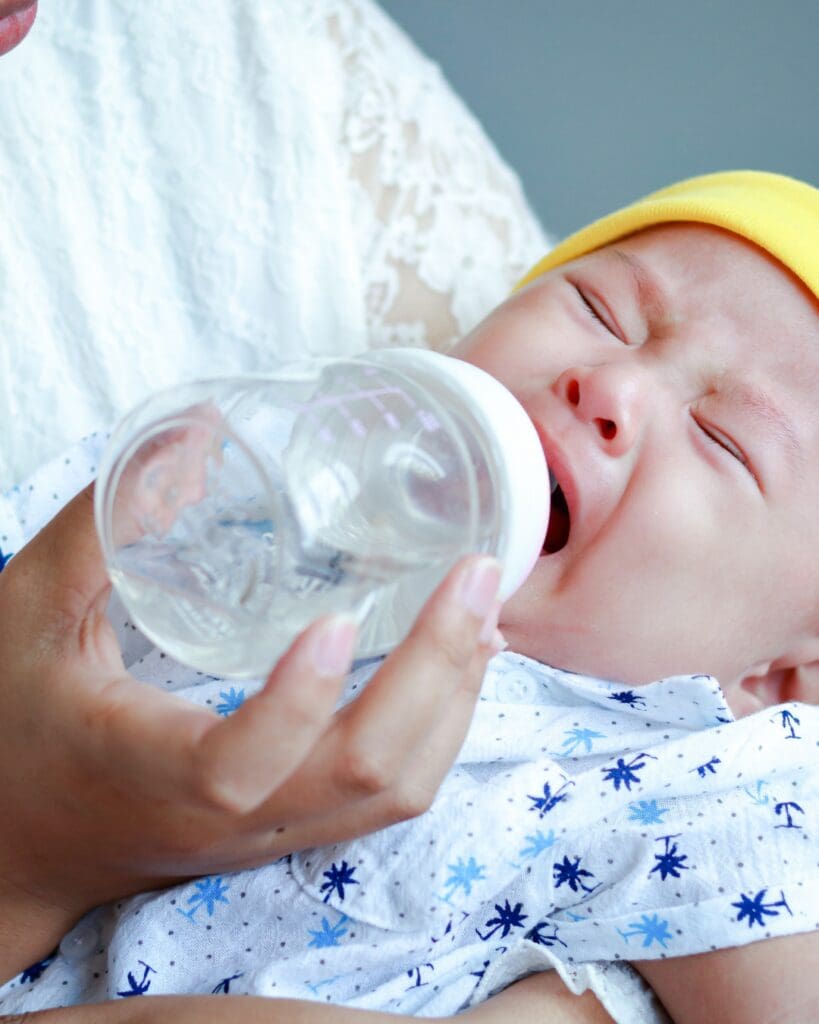
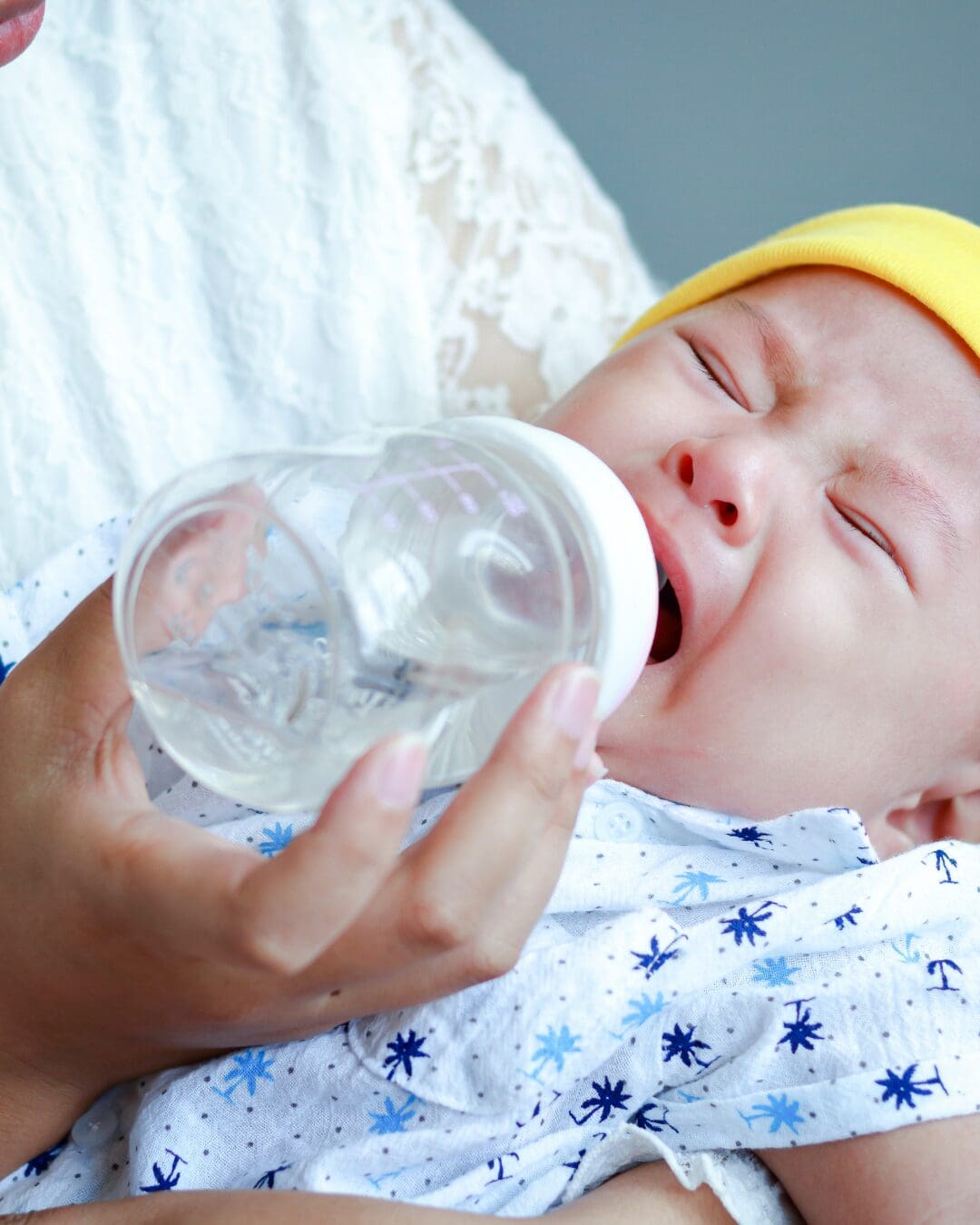
You’ve tried different bottles. Different teats. You’ve tried offering it at different times of day, in different rooms, possibly while doing a little dance. And still – nothing.
You’ve probably also been on the receiving end of some deeply unhelpful advice:
- “They’ll take it when they’re hungry enough”
- “Just leave the house and let someone else try”
- “Try a different bottle” (you’ve tried six)
If your breastfed baby is refusing a bottle, I want you to hear this clearly: it is not your fault, and you are not doing it wrong.
Around 60 to 70% of breastfed babies initially refuse a bottle. That’s not a small number. And when you understand why it happens, the whole thing starts to make a lot more sense.
What you’ll learn
- Why babies refuse bottles
- What most advice gets wrong
- A step by step plan that works
- How to stop making it worse
Why breastfed babies refuse the bottle
Bottle refusal is not random, and it is absolutely not your baby being difficult. Breastfeeding is far more than just a way to get milk – for your baby, the breast means comfort, regulation, sleep, and closeness. A bottle doesn’t offer any of that. At least not at first.
On top of that, breastfeeding and bottle feeding are genuinely different skills. At the breast, your baby controls the flow, uses complex muscle patterns, and pauses naturally. With a bottle, the milk often flows faster, the sucking pattern is different, and the whole thing feels unfamiliar.
So when you offer a bottle, you’re not just asking your baby to feed in a slightly different way. You’re asking them to accept something that feels completely unlike everything they know about feeding.
For some babies, that transition is easy. For many, it isn’t. And that is a completely normal response from a healthy, breastfed baby – not a sign that something has gone wrong.
Why refusal happens;
- Breast = comfort, not just milk
- Bottle feels unfamiliar
- Different sucking pattern

What most advice gets wrong
Most of the advice floating around focuses on getting the bottle in, rather than helping your baby actually feel comfortable with it. That’s a really important distinction.
Approaches like pushing through when your baby is upset, waiting until they’re very hungry, or letting someone else “force the issue” can all increase stress, create negative associations, and make refusal worse over time.
Bottle feeding should not feel like a battle. For you or your baby.
Common bad advice;
- Wait until they are desperate
- Force it
- Pass baby to someone else immediately
Before we get into what works – stop doing this first
A few things that commonly make bottle refusal worse:
- Forcing the bottle into your baby’s mouth
- Repeatedly trying when your baby is already upset
- Waiting until your baby is very hungry and distressed
- Switching to a completely new approach every single day
These can all lead to stronger, more entrenched refusal. If any of these sound familiar, don’t worry – you’re not alone, and it’s not too late to reset.
Stop doing this;
- Forcing the bottle
- Trying when your baby is upset
- Starving your baby in the hope they will take the bottle

Why having a clear plan makes all the difference
Most parents try everything at once – different bottles, different people, different times of day – and end up more frustrated, not less. What actually works is a consistent, low-pressure approach that gives your baby the chance to learn gradually.
Here’s what that looks like in practice.
What actually works: a step-by-step plan
Step 1: Get the timing right
Offer the bottle when your baby is calm, slightly hungry but not desperate, and not overtired. Early feeding cues – stirring, rooting, bringing hands to mouth – are your window. A frantic, crying baby is not in the right headspace to try something new.
Step 2: Start with you
A lot of parents are told to hand the bottle straight over to someone else. As an IBCLC, I’d actually suggest starting with you. Your baby already feels safe with you – that matters enormously when you’re introducing something unfamiliar.
Try holding your baby in a slightly different position than you would for breastfeeding, offer the bottle calmly and without pressure, and keep the environment familiar. Once your baby starts accepting the bottle with you, it’s usually much easier for someone else to step in later – and without the stress of separation on top of everything else.
Step 3: Position matters
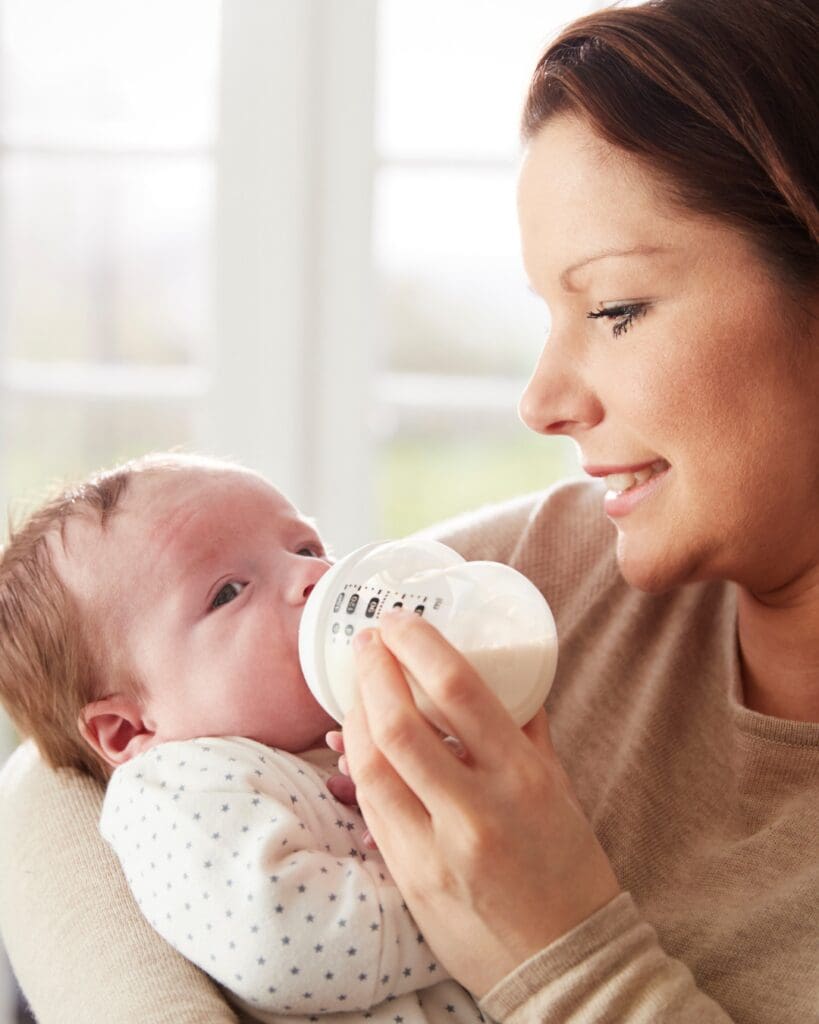
Avoid feeding your baby flat on their back. A more upright position with paced, responsive feeding helps the whole experience feel closer to breastfeeding – which is exactly what you’re aiming for at this stage.

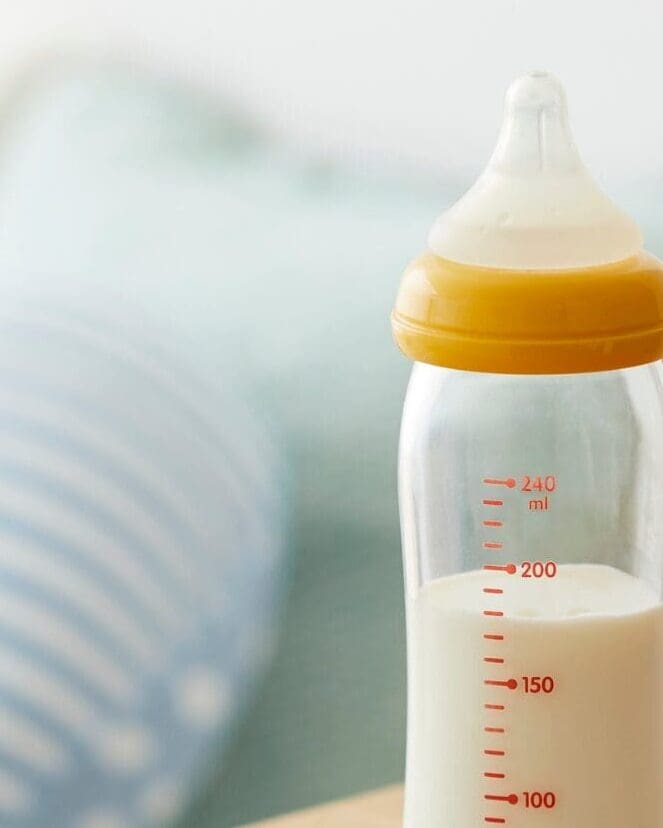
Step 4: Choose a suitable teat
Look for a gradual slope, a slower flow, and a soft, flexible material. The goal isn’t to trick your baby – it’s to make the transition as easy as possible. If you want a full breakdown of what to look for, you can read my guide on choosing the best bottles for breastfed babies.
Step 5: Keep it low pressure
This is where so many parents get stuck. If your baby refuses, pause, reset, and try again later. One calm attempt is worth ten stressful ones. Progress with bottle introduction is almost always slow and steady – and that’s completely fine.

Your plan in simple terms;
- Calm Baby
- Mum offer the bottle
- Upright position
- Slow flow teat
- No pressure
How long does bottle refusal last?
With a consistent approach, some babies accept the bottle within a few days. Others take one to two weeks. What matters most is consistency, low pressure, and getting the setup right – not trying harder or switching things up constantly.
Common mistakes that slow things down
- Trying too many different bottles at once
- Only offering when your baby is very hungry
- Changing your whole approach every day
- Expecting it to happen quickly and giving up when it doesn’t
Small, consistent steps work better than constant changes every time.

When to get support
If your baby is consistently refusing, you’re feeling stressed every time you try, or you have a deadline coming up like returning to work, please don’t just keep throwing bottles at the problem. Getting a clear plan from someone who knows what they’re doing will make this so much easier.

Want a step-by-step plan that actually works?
This is exactly what I teach inside my Bottle Refusal course. It’s a calm, structured approach so you’re not just trying ten different things and hoping one sticks. Inside, you get:
- A clear, structured plan to follow
- How to choose the right bottle and teat
- How to introduce it without stress
- What to do if your baby refuses again
If you want a calm, proven approach, you can start the Bottle Refusal course here.
Want to feel confident with feeding overall?
If you’re also breastfeeding, thinking about pumping, or planning ahead for more flexibility, it can help to have everything covered from the start. The Ultimate Breastfeeding Course has you sorted – this includes my expert led, Prepare for Breastfeeding course, Latching 101 and Pumping When Breastfeeding, so you’re not piecing things together one problem at a time.
You can explore the The Ultimate Breastfeeding Course here and feel confident across every stage of feeding.


Comments +