





It’s 3am. Your baby’s feeding AGAIN. And you’re lying there, phone in one hand, Googling “is my baby getting enough milk”.
Hi, I’m Meghan, midwife and IBCLC. And let me tell you, you are not the only one. This is the question that keeps more new mums awake than almost anything else.
If you’ve been watching every feed like a hawk, counting every nappy and analysing every cry for clues… firstly, you’re completely normal. Secondly, I’ve got you.
Here’s the tricky bit. When you’re breastfeeding, you can’t see how much milk your baby’s taking. So your brain, bless it, fills in the gaps. Usually with the worst-case scenario.
“They’re feeding again – does that mean I don’t have enough?”
“My boobs feel softer today – has my milk gone?”
“They seem a bit fussy – are they still hungry?”
Most of the time, these are completely normal breastfeeding behaviours. Not signs that something’s wrong. But I know “probably fine” isn’t enough when you’re the one sat there worrying. So here are the actual signs to look for.
In this post:
- The most reliable signs your baby is getting enough
- What’s normal, and what’s not
- When to worry
- What to do next

The most reliable signs your baby is getting enough milk
These matter WAY more than how long or how often your baby feeds. Please don’t time your feeds. I’m begging you!!
1. Wet and dirty nappies
This is one of the most reliable signs we have, so it’s worth paying attention to. Here’s what to expect in the early days.
Wet nappies:
- Days 1 to 2: at least 1 to 2 wet nappies
- Days 3 to 4: at least 3 wet nappies, and they’ll start to feel heavier
- Day 5 onwards: at least 5 to 6 heavy wet nappies a day
Not sure if a nappy is heavy enough? Pour three tablespoons of water into a clean nappy and pick it up. That’s roughly what you’re aiming for.
Dirty nappies, and what colour to expect:
- Days 1 to 3: dark green or black, sticky poos called meconium. Completely normal, even if they look alarming!
- Days 3 to 4: changing from black/green to a brown/green/yellow colour. This is called a changing stool, and it means your milk is coming in.
- Days 5 to 7 onwards: yellow, soft and seedy. Breastfed baby poos are often quite runny and, surprisingly, don’t smell much. Enjoy that while it lasts.
In the early weeks, aim for at least 2 dirty nappies a day. Lots of breastfed babies poo after every feed, so you may well see more. If you’re ever unsure, your midwife or health visitor can help you check.
2. Weight gain
It’s completely normal for babies to lose a little weight in the first few days. It’s expected, and nothing to panic about. After that first dip, their weight should start going up, and most babies are back to their birth weight by around 10 to 14 days. Steady weight gain after that is a really reassuring sign that feeding is working.
3. You can hear or see swallowing
During a feed, keep an eye (and an ear!) out for pauses in sucking, a soft little “kah” sound, and their jaw moving. That’s your baby actually taking milk in, not just using you as a human dummy. Even if it sometimes feels that way.
4. Some settled spells across the day
Not every feed ends with a peaceful, milk-drunk baby gazing up at you. But across the day, you should see some times when your baby seems content. If they’re distressed after every single feed, that’s worth getting checked.

Things that look worrying but usually aren’t
This is where SO many mums get caught out. Honestly, I’d shout this from the rooftops if I could.
Feeding very often
Newborns often feed 8 to 12 times in 24 hours, and that’s the MINIMUM, not the limit. Some babies feed far more, even close to every hour on busy days, and that’s normal too!! Cluster feeding, when your baby seems to feed almost non-stop for a few hours, is completely normal too. It is not a sign you’re running low. Your baby is doing exactly the right thing to build your supply.
Fussing at the breast
Babies come on and off, cry during feeds and seem unsettled sometimes. That does not automatically mean low supply. Babies are just a bit unpredictable, especially in the early weeks.
Softer boobs
In the early days, your breasts may feel really full and quite firm. After a few weeks, they often feel much softer. I promise you, this is NOT your milk disappearing. It usually means your supply is settling down to match your baby’s needs, which is actually a good thing.

Signs worth taking seriously
Some signs do need a closer look, especially if you’re seeing a few of them together:
- Fewer wet nappies than expected for their age
- Little or no weight gain
- A very sleepy baby who isn’t waking for feeds, or isn’t feeding well
- No swallowing sounds during feeds
- Long feeds with no signs of being satisfied afterwards
If any of these ring a bell, please reach out for support sooner rather than later, okay? This kind of thing is SO much easier to sort early on.
What actually causes low milk supply
Low supply is rarely just bad luck. The most common causes I see as an IBCLC are:
- An ineffective latch
- Not feeding often enough
- Milk not being removed well
- Long gaps between feeds brought in too early
That’s why getting the latch right from the start, and feeding responsively in those early weeks, matters so much. Not sure what a good latch actually looks like? Have a look at my step-by-step video course for getting a deep, pain-free latch.

So what should you do if you’re worried?
Start with the basics:
- Are the nappies looking good?
- Is weight gain on track?
- Can you hear swallowing during feeds?
Then please, please get support early. Have a feed watched by someone who knows what they’re looking for. Get your latch checked. You do not have to wait until things feel much worse before asking for help. That’s exactly what midwives, health visitors and IBCLCs are here for.
Try not to panic, if possible!! I promise you there is always help.
Want to feel confident about your milk supply from the start?
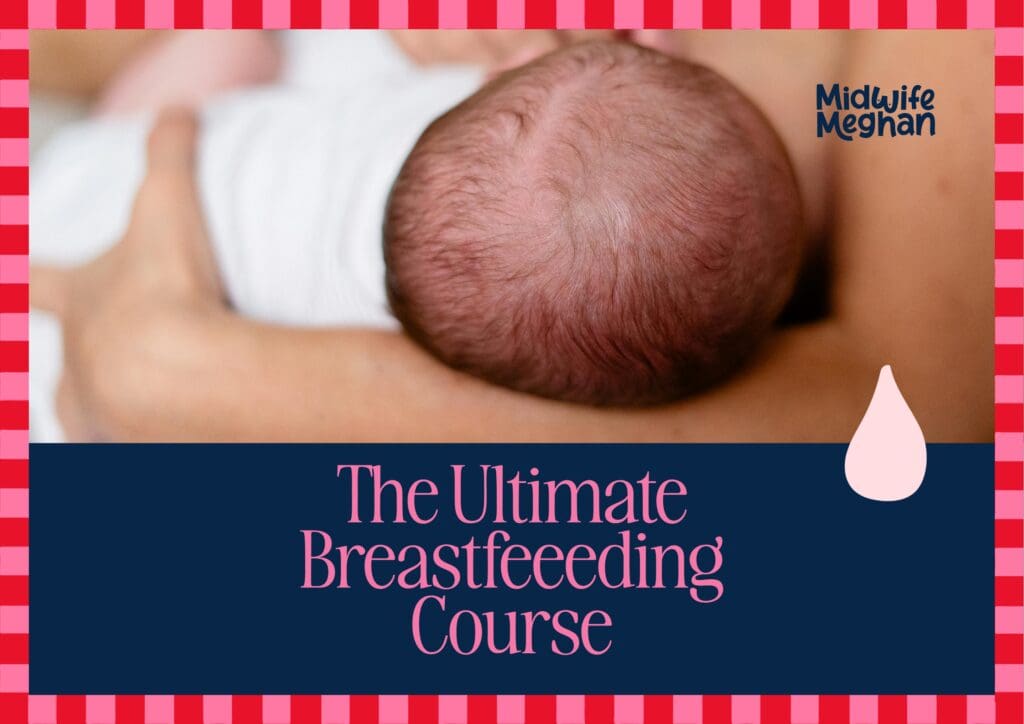
This is exactly what I teach inside my Ultimate Breastfeeding Course. Because worrying about every single feed is exhausting, and most of it can be avoided with the right information beforehand. Inside, you’ll learn:
- How milk supply actually works
- How to build a full supply from day one
- How to spot problems early
- What to do if things don’t go to plan
So you’re not second-guessing every feed. The Ultimate Breastfeeding Course also includes Latching 101 and Pumping When Breastfeeding, so everything’s in one place. You can start the Ultimate Breastfeeding Course here and go in feeling properly prepared.
Want more help like this?
Join Notes from the Night Feed, my newsletter. Real feeding help from a midwife and IBCLC, a little bit of my week, and you’re the first to hear about anything new. Unsubscribe any time.
Midwife Meghan ❤️


Comments +